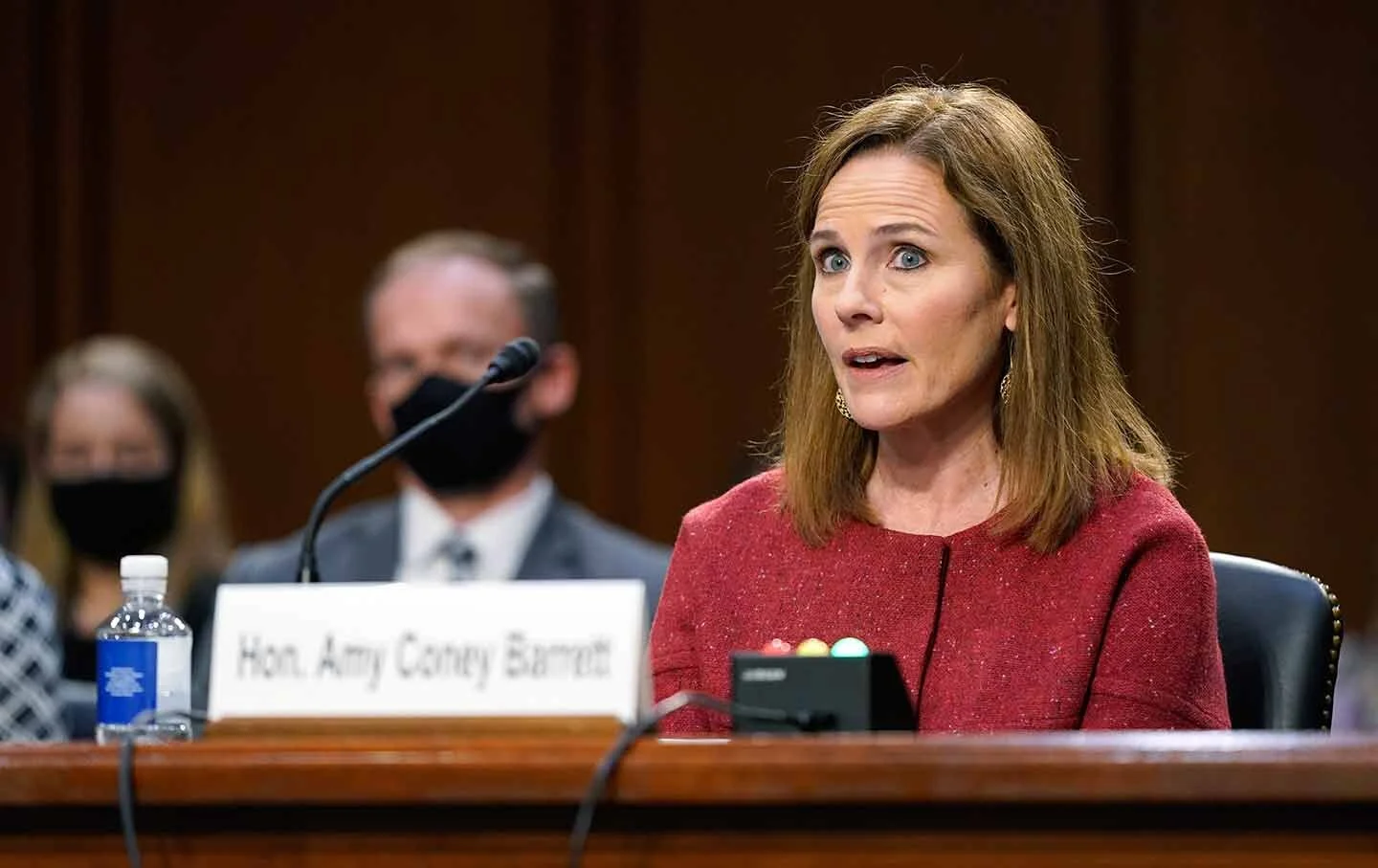
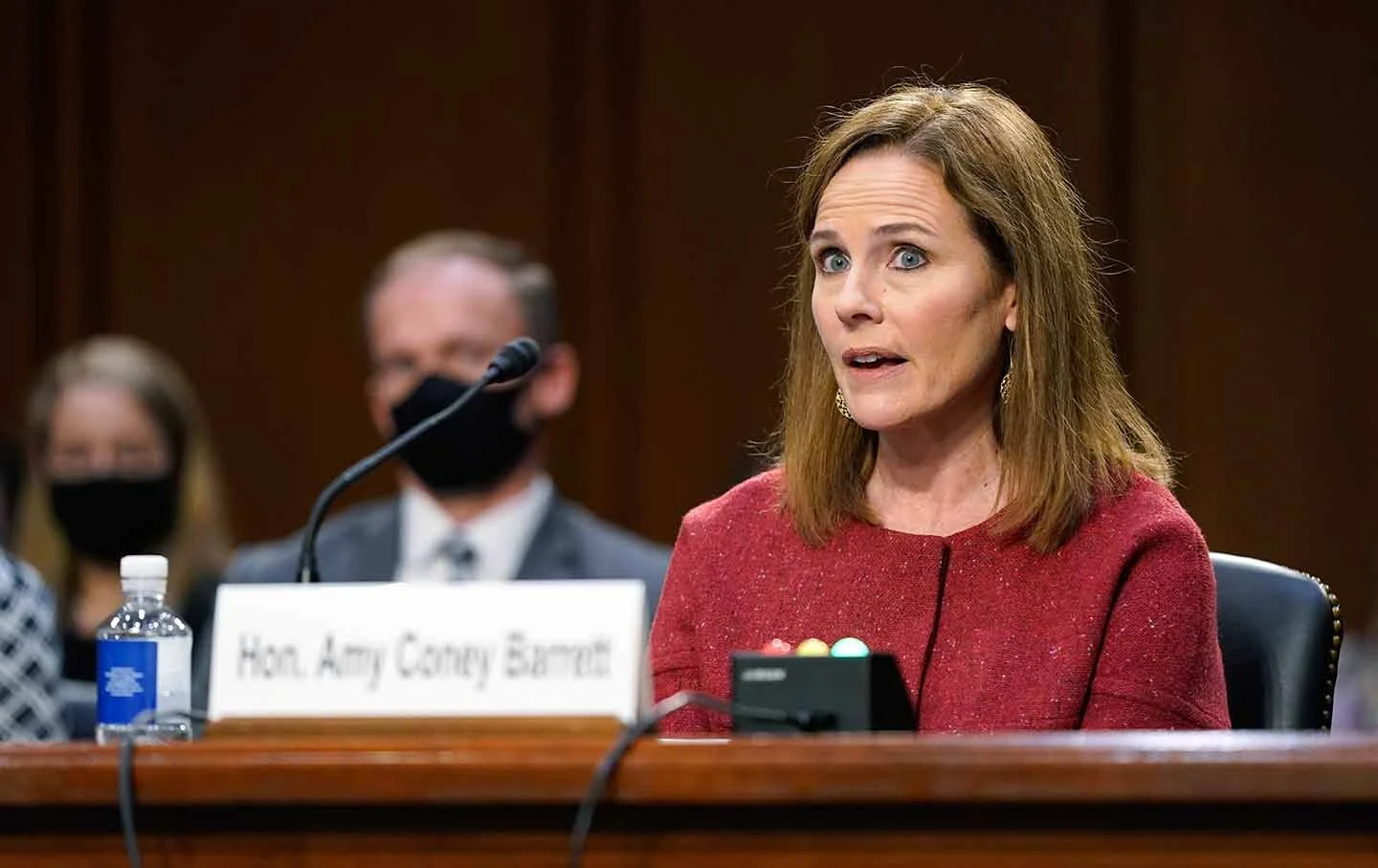
Amy Coney Barrett speaking at her confirmation hearing before the Senate Judiciary Committee. (Patrick Semansky / AP Images)
Senate confirmation trials to appoint Amy Coney Barrett, President Trump’s nominee to replace Justice Ruth Bader Ginsburg on the Supreme Court, concluded this week. Barrett’s speedy confirmation process has sowed tensions along party lines, with Democrats seeking to push back the confirmation until after the election.
On Thursday, October 15, the Senate Judiciary Committee formally scheduled a vote on Amy Coney Barrett’s nomination to the Supreme Court for October 22. This motion comes despite opposition from Democrats to delay Barrett’s confirmation.
Democrats including Senators Dick Durbin, D-Ill., and Richard Blumenthal, D- Conn., called to delay the vote, asserting Barrett’s confirmation is illegitimate so close to the election.
“The consequence of this rushed process is that we’ve given inadequate scrutiny to this nominee. I move to delay these proceedings so that we can do our job,” argued Sen. Richard Blumenthal, D-Conn., unsuccessfully motioning to delay the vote indefinitely.
Senator Lindsey Graham’s action to schedule the October 22 vote disregards committee rules to have at least two members of the minority party present, the New York Times reports. Only Senator Richard Durbin, D-Ill., was present for the vote from the Democratic party. Rejecting Sen. Durbin’s objection, Sen. Graham argued that the opposing party would make the same choice in his position, moving ahead with the motion.
Senate Majority Leader Mitch McConnell plans to begin Barrett’s consideration on the Senate floor as early as October 23, meaning a final vote may take place the following week, as reported by NBC News on October 15. Barrett’s confirmation would solidify a 6-to-3 conservative majority in the Supreme Court.
Throughout the hearings, Senators pressed Barrett on hot-button issues including healthcare, abortion, voting rights and climate change. Healthcare was at the forefront of issues discussed, as the Supreme Court approaches a case on the Affordable Care Act, scheduled to be heard November 10. In response, Barrett continuously dodged definitive answers and commitments to issue stances throughout her hearing, asserting it is not her role to address questions of policy.
“I have no agenda,” Barrett stated in rejecting speculation on political issues.
Looking ahead, Republicans expect to have the votes necessary to confirm Barrett to the court before the election on November 3. Though Barrett has maintained she will keep an open and independent mind in deciding all cases, many Democrats fear this confirmation could threaten healthcare, abortion rights and LGBTQ+ rights for millions of Americans.
Though Democratic response to the confirmation remains unclear, some Democrats allude to potential retaliatory action if they regain Senate majority power in January. The election outcome will determine what power Democrats have to take responsive action.
— Valeriya Antonshchuk (October 17, 2020)